Saturday, May 30, 2020

About Me: A New Chapter

I finally figured out what I want to do when I grow up: Medical Coding. Medical Coding is assigning alphanumeric codes to diagnoses and treatment services/procedures for the purpose of insurance reimbursement.

I enrolled in a Medical Coding program at my local community college, Hillsborough Community College. Go Hawks!
                                                  Hillsborough Community College Paralegal Program - Home | Facebook
I just started my first semester on May 18. Now I will be over 49 (also known as 50) when I complete the program, but hey, better late than never, right?

In addition to offering a Medical Coding certificate, the school offers a certificate in Billing. The Billing program has three extra courses beyond the Medical Coding program, so I am adding those courses and getting both certificates. The program recommends taking three courses per semester, but me wanting to finish quickly with both certificates, am taking four. I am also working part-time at a podiatrist's office where I am getting some experience with codes and how insurance companies work.

The four courses I am taking are Anatomy & Physiology, Medical Terminology, Introduction to Health Information Management, and Office Applications for Business. The courses were not originally supposed to be fully online, but instead hybrid classes with some online work and one in class day per week. Because of COVID-19 however, they are all fully online. I thought this change was going to be easier. I was wrong.

I have Bachelor's and Master's degrees from traditional schools, but this online format is much harder. Back in the day, I could just sit in class, listen to a lecture and take notes. It wasn't even mandatory that I attend every class each week. Most classes had a mid-term, a 20 page paper and a final exam. Online school however, requires "attendance" in the form of logging in several times per week to write a discussion post about a specific topic then replying to two of my fellow students' posts. It is very time-consuming and I feel overwhelmed, but hopefully I will adjust to this new format.

I guess I will be reading mostly textbooks for awhile now. Wish me luck!

Sunday, December 30, 2018

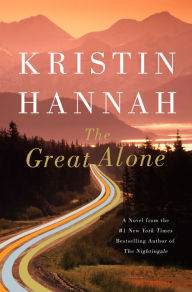
The Great Alone

Author: Kristin Hannah
Publisher: MacMillan, 2018               
My Source: Land O Lakes library

     
                                                   The Great Alone


I haven't written a blog post in quite awhile, but this book inspired me to return to blogging, yes, it is that good! And I'm not too proud to admit that I experienced a wide variety of emotions and even shed a few tears.

Normally I would not be attracted to a book celebrating the great outdoors as I am more of a stay at home and curl up with a book and a blanket kind of gal, but I read this book because I loved the Nightingale also written by Kristin Hannah (and highly recommended by critics and myself.)

Alaska became a state on January 3, 1959. "North to the Future" is the official state motto, adopted in 1967 for the centennial of the Alaska Purchase. It was selected by a committee who sponsored a contest with a monetary prize for the best entry. Juneau journalist Richard Peter won the contest, stating that the motto "...is a reminder that beyond the horizon of urban clutter there is a Great Land beneath our flag that can provide a new tomorrow for this century's 'huddled masses yearning to be free'."

This story embodies that motto. The characters in the novel move to Alaska from the mainland to live off the grid, reinvent themselves, leave behind the hustle and bustle of the cities to the south, and experience true freedom. One character in the story, Large Marge tells newcomers that, "in Alaska, everyone is either running to something or running away from something." The author portrays her characters as brave and self-sufficient people knowledgeable in survival skills either innately or by necessity.

There are two main characters in the book, one is Leni, a teenage girl who moves to Alaska with her parents in the early 1970's. The family moves there because Leni's father's late Vietnam buddy left him a rustic cabin in remote Alaska. Leni forges new frontiers and new friendships all while hiding the secret of her parents' volatile relationship.

The other main character is the state of Alaska itself. There are numerous wonderfully written paragraphs describing the scenery and wildlife of Alaska. My mind was full with vibrant imagery. The story is also rich with foreshadowing in the form of repeated warnings about the dangers of Alaska and the many ways one can die there.

Alaska can be moody with its beautiful mild summers and harsh freezing winters which demand the respect of the people who call it home. The same can be said of Ernt, Leni's father, whom after being rescued from a POW camp in Vietnam suffers from horrible PTSD. PTSD was not well known or understood in the 1970's so Ernt receives no treatment for his illness. Ernt's moods change as quickly as the unpredictable seasons in Alaska, and like the seasons, his moods threaten the safety of those around him.

Leni attends a one room schoolhouse where she learns about friendship and the history of Alaska. One lesson she learns, and of which I was not aware, is that during WWII, two of the outer Aleutian Islands—Attu and Kiska—were invaded and occupied by Japanese troops. They were the only part of the continental territory of the United States to be occupied by the enemy during the war. Their recovery became a matter of national pride.

The Great Alone is a marvelous book packed with vibrant well-developed characters and exciting story lines. I don't want to give too much away because I want readers to discover the magic of the novel for themselves.


                                                          Rating: 5 out of 5 high fives

Sunday, April 1, 2018

Tampa Bay Times Festival of Reading 2017

A few months ago my husband and I went to the Tampa Bay Times Festival of Reading on the campus of USF St. Pete. It was a full day of author talks and book signings as well as various book-related booths to purchase books and other merch. We went to see three authors in particular.

The first one was Michael Connelly, author of numerous popular books including the Harry Bosch series which has been adapted for the small screen and is available for streaming on Amazon. While he did not read from any of his works, he did participate in an hour long interview including Q&A. He introduced his newest series about an L.A. female detective named Renee Ballard who works the night shift and catches now retired Harry Bosh rifling around in the file cabinet to work on a cold case that won't let him sleep. The two team up to solve the case.


Next we attended a talk by Nathan Hill, author of The Nix. The Nix is Mr. Hill's first novel and it took him ten years to write. He joked that his next book will only take 9 years to write. Mr. Hill read from his book and discussed his writing process. Unlike most authors who start with an outline, Mr. Hill wrote "improvisationally" allowing his novel to come to life organically, drawing from influences affecting him during that ten year period. He only tied the themes together after most of the book was written, maybe that is why the book started out at a hefty 1,000 pages until it was cut down to a still sizeable book of 600 pages.


Mr. Hill told the audience that all the elements of the book connect together by two themes: the ways people wall off others and how people lose the ability to communicate with others. These themes seemed to resonate with readers as the book has become wildly popular and there are plans for The Nix to be turned into a limited series tv show with Meryl Streep and J.J. Abrams behind the scenes.


The final presentation we attended was by Sarah Gerard, a young female writer who grew up in St. Pete and now teaches creative writing in New York. She discussed her most recent book, Sunshine State. It is a collection of creative nonfiction essays that take place in Florida. They consist of deeply personal accounts of events that took place throughout her life. Ms. Gerard first read from an essay about the amusing and heart-breaking relationship with her childhood best friend. Then she read a poem about all of the animals she has ever seen in her thirty plus years.


You can follow Michael Connelly and Sarah Gerard on Twitter @ConnellyBooks and @SarahNumber4

Tuesday, March 6, 2018

Another About Me: Part Four

My husband and I have been living in Florida for almost 5 months now. It still surprises me to see palm trees and feel the warm weather in winter, but I'm not complaining.

We have been acting like tourists visiting many local attractions. We have been to a Tampa Bay Lightning hockey game, a Tampa Bay Buccs football game, a Yankees spring training game, Clearwater Beach, the Dahli Museum, and the St. Pete Museum of Fine Arts Star Wars costume exhibit, just to name a few activities.


We have frequented a Land O' Lakes (yes, that is the name of my town) craft beer bar called In The Loop which has an outdoor deck overlooking a lake and yoga and beer on Sunday mornings.

We have also met some of our neighbors.


I fell into a job at Ashley Homestore as a Customer Service Representative because I told a neighbor that I was looking for a job and he said he was the store manager at Ashley and was hiring. I started out part-time on December 4, 2017 and got promoted to full-time on February 18, 2018. It is a good job with low stress and great co-workers.

I have had a lot less time to read lately since starting my job, but I'm happy to say that the Connerton Book Club is going strong. We have met three times so far and read The Nix by Nathan Hill, The Curious Charms of Arthur Pepper by Phaedra Patrick, and Small Great Things by Jodi Piccoult. Our current book is The Rosie Project by Graeme Simsion which I am enjoying reading for the second time.

Wednesday, November 8, 2017

More About Me: Part Three

Well my husband and I had a wonderful time in Paris!


Since then we sold and gave stuff away at both my mother-in-law's house and our house.  It took longer than we expected and then we had to wait on our new house to be built in Florida, so we went on a Caribbean cruise with my family.


Next we became hometown tourists in our city of Louisville seeing things we never got to see while living there for 20 years.

Backside tour of Churchill Downs as recommended by Kevin Gibson--100 Things To Do In Louisville Before You Die


                                                            Maker's Mark Distillery


Finally we packed up the remaining stuff and our two dogs and moved to the Tampa area in October and things are going great!

                                                    This is us on the day we moved out.


                                                             This is our new house


Life is good here in Florida. My parents are close by and visit often. The weather is beautiful and everyone we have met has been more than friendly!

I had to leave my book club behind, but they did FaceTime me during the last meeting! Although I can't replace them, I did recently start a new book club with my new neighbors. We are currently reading The Nix by Nathan Hill and meeting at our neighborhood clubhouse to discuss the book on November 16, 2017. So far it looks like we are going to have a large turnout. The book is a long and detailed one. It was maybe a bit too ambitious for a first book, but we'll see.

It just so happens that Nathan Hill will be speaking at a reading
festival in St. Pete on this Saturday, Nov 11. My plan is to attend his talk and learn more about him and the book and bring that information back to my new book club.

While I have continued to read about two books per month and have attended a couple of author talks this past year, I have not been faithful to my commitment to continue writing book reviews or report on author talks. I guess life just got in the way. I will try to at least post something about the upcoming reading festival.


Friday, January 13, 2017

Joe Keith Bickett--The Origins of the Cornbread Mafia


Last evening despite the pouring down rain and high winds, me and about fifty other Kentuckians attended a standing room only book signing at Carmichael's by first time author and Kentucky native, Joe Keith Bickett. Mr. Bickett is somewhat of a hometown legend and hero and his book is a memoir entitled The Origins of the Cornbread Mafia: A Memoir of Sorts.

The gathering had the feeling of a large family reunion as most of the audience members were originally from the author's hometown in Marion County, Kentucky (located in central Kentucky southeast of Louisville.) Many of the audience members were very familiar with the author and I overheard several people proudly explaining their personal connections to both Marion County and the Cornbread Mafia. The event even brought out those who wouldn't normally attend a book signing as one woman told me she was 71 years-old and attending her first book signing. She said, "I do read, but I was just busy raising children my whole life." She added that if anyone in her family or from "back home" knew she was at a book signing they would laugh at her.

If you're not from Kentucky, you may not be familiar with the infamous Cornbread Mafia. They consisted of a large group of men who in the 1970's started a huge marijuana cultivation and distribution ring in Marion County. Mr. Bickett was reluctant to reveal the origins of the name of the group because he wrote about it in his book and wanted everyone to read the book, but I would bet one could Google it if curious.

Mr. Bickett was one of the originators of the so-called mafia and spent 21 years in prison for his criminal involvement in the group. During that 21 years he wrote snippets of his life story which eventually became this book. He read from a chapter that described a scene in which he and several other men were driving a convoy of three trucks moving marijuana plants from one farm to another to evade the law.

Mr. Bickett took questions from the audience including one about the legalization of marijuana. He unsurprisingly went on the record as being in favor of legalization, citing the large amount of money the state is missing out on by keeping the crop illegal. He added that he is not the only man who was sentenced to Draconian prison time for marijuana charges. Additionally Mr. Bickett briefly mentioned his good friend and past colleague, Johnny Boone, who was recently arrested in Canada where he had been hiding out for decades.

Mr. Bickett appeared to be a colorful character with an interesting past, and I have no doubt that his book is entertaining.


As an aside, there was another book written about the Cornbread Mafia by Kentucky native and journalist, James Higdon entitled The Cornbread Mafia: A Homegrown Syndicate's Code of Silence and the Biggest Marijuana Bust in American History. This book provides a journalistic take on the history and legacy of the group.


You can follow Joe Keith Bickett on Twitter @JoeKeithBickett.

Tuesday, August 9, 2016

Z: A Novel of Zelda Fitzgerald

Author: Therese Ann Fowler
Publisher: St. Martin's Press, 2013
My Source: Louisville Free Public Library


I decided to read this book after watching and enjoying the pilot of "Z; The Beginning of Everything" on Amazon Prime. At this time only the pilot is available, but the rest of the series is coming out soon.

As the title states this is a fictional account of the life of Zelda (Sayre) Fitzgerald, wife of author F. Scott Fitzgerald. The story begins in Montgomery, Alabama in 1918 just before Zelda's 18th birthday. She is a popular carefree southern belle who often rebels against her traditional parents. Scott is a northerner, an army officer, and a man with dreams of becoming a writer. Zelda and Scott fall in love despite their differences and her parents' disapproval. They marry in New York City and Zelda's world is transformed.

Scott's first novel, This Side of Paradise, is a huge success and life is grand for the couple. They meet other writers and artists of the Jazz Age and attend all of the most exclusive parties. They get caught up in the scene, spending lots of money and drinking to excess.


How good life was! There was always an excuse to host a party or attend one. Every month, we got word that Paradise was going back to press for another five thousand copies. Scot wrote and sold three new stories. He befriended every actor, artist, writer, dancer, and bootlegger we came into contact with, and subsequently our house on weekends grew full of strange and lively and, yes, intoxicated people, but we almost always had a lovely time. 


Reading this book was like being transported back in time to the roaring 20's. I could clearly picture the fancy clothes and forbidden cocktails. I knew nothing about the truths and rumors surrounding this famous couple, but as I was reading I couldn't help thinking that life was just a little too good for them and I was waiting for the other shoe to drop. It is in Paris where that seems to start to happen.

At first their life is similar to the one they lead in NYC, socializing with famous writers and artists, including Ezra Pound, Gertrude Stein, and Ernest Hemingway. Then things slowly change and the couple's marriage suffers. The author implies that this is due to several reasons: Scott's close relationship with Hemingway (who does not like Zelda), Scott's alcohol abuse and controlling nature, and Zelda's mental illness. The book portrays Zelda as a victim, and some biographers and scholars believe this to be true, but there are just as many who believe that Scott was the victim.

I thoroughly enjoyed this book both because of the lavish lifestyle portrayed and because of the complex relationship that developed between the characters. Scott and Zelda were so overjoyed and hopeful at the beginning, that witnessing their demise was heartbreaking.


Rating: 4.5 out of 5 high fives

Sunday, July 24, 2016

Those Who Save Us

Author: Jenna Blum
Publisher: Harcourt Books, 2004
My Source: Amazon for Kindle


I have read several books about WWII this year. I became interested in this subject because my mother is a WWII buff who reads tons of books about the war. She and my father even went on a trip to Europe several years back tracing the path my grandfather took while he was stationed in the Army as a medic during the war. Although the books I have read are fictional, they provide glimpses into what life must have been like during wartime Europe.

Those Who Save Us is a mother-daughter story spanning the fifty years from wartime Germany to 1990's America. Anna, a young German citizen is the maid and cook for her strict widowed father during the years leading up to the war. As the war approaches she falls in love for the first time, but the relationship is doomed. Anna does some things she is not proud of to save herself and her three year-old daughter, Trudy, from the atrocities of war. They are liberated by an American soldier at the end of the war and move to the United States to start a new life with him. Anna vows to herself to never tell anyone about her experiences in Germany.

Trudy, influenced by her German heritage and a single photograph of herself and her mother with a high-ranking Nazi official, becomes a German history professor. Through her research into the experiences of the German people during the war, she uncovers the secrets her mother has been keeping for fifty years about what she did in Germany and about Trudy's biological father.

I found both mother and daughter to be intelligent, but psychologically immature characters. Trudy, for instance, is practically a loner after her marriage fails primarily due to her obsession with German history. In an effort to comprehend her mother's past experiences Trudy takes on a new research project interviewing Germans about their lives during the war. Ironically, Trudy never gets the opportunity to interview her mother, the one person she craves to connect with and understand better. Anna, curious about her daughter's project, but burdened by her secrets and permanently changed by the war, remains emotionally distant from her daughter.

The story alternates between the past and the present with descriptions so vivid I felt as though I was there. The author traces Anna's personality changes over time which explain her present behavior. Although quite fascinating, some of the passages about Anna's past are painful to read as Anna and Trudy struggle to survive wartime Germany. I found myself equally engaged in both stories of the past and the present.

Throughout the story I empathized with both characters and hoped for a heart to heart talk between mother and daughter, but by not including one, the author probably portrayed a more realistic depiction of someone of Anna's generation who lived through the war first hand. I know that my grandfather spoke very little about his time in the war both because people of his generation did not typically share their feelings and because it was just too painful.

This book would be interesting to WWII buffs and those wanting to learn more about that time period, but it not just a history lesson. It is also a character driven story about people with strengths and weaknesses that pulled at my heart strings.


Rating: 4 out of 5 high fives

Thursday, July 14, 2016

About Me: Part Deux

As I talked about in my first About Me post I was a caretaker for my mother-in-law and reading was my respite and my book club was my support group. Well, sadly my mother-in-law passed away on July 8, 2016 after a long battle with breast cancer that began way back in 1991. She was a fighter and experienced many ups and downs, but remained positive throughout her arduous journey.


Her oncologist referred her to hospice care (Hosparus as it is called in Louisville) almost one year ago and a nurse came to the home every Wednesday to check on her and our family. At the end she spent 12 days at the inpatient hospice unit where her pain and other symptoms were controlled. I cannot thank the hospice home staff and inpatient staff enough for their medical care and emotional support. 

After 2+ years in the role of caretaker, that chapter of my life has suddenly come to an end. Now I need to reinvent myself. First, however, my husband and I are preparing for a much needed vacation to Paris in late August. I'm brushing up on my French and reading guide books.

When we return we will need to clean out my mother-in-law's house and put it on the market to sell. Then we will be doing the same thing with our house as we are planning to move to Florida to be closer to my parents. I will miss my friends and my book club.

As far as work goes, I am not sure what I will do. I abandoned my career as a psychotherapist and tried a few other things after that, but nothing felt right. Maybe I will do volunteer and/or paid work somehow related to books and reading.

One thing I do know is that I will continue to read, review books, and attend author events as these activities have become enjoyable hobbies and stress relievers for me.


Saturday, June 25, 2016

The Sport of Kings

Author: C.E. Morgan
Publisher: Macmillan, 2016
My Source: Carmichael's Bookstore


Recently I attended a book reading at Carmichael's by C.E. Morgan, author of the new novel, The Sport of Kings. Morgan, who grew up in Cincinnati and attended Berea College and Harvard Divinity School, calls Berea, Kentucky home. Morgan did not take questions or talk about her book (except to say that it took nine years to write), she simply read excerpts from her book, letting it be the star of the show.


Themes of wealth, poverty, slavery, racism, sex, and rage prevail in this epic saga about Henry Forge, a boy who grows up in the 1950's on a farm in Paris, Kentucky with a brutally strict father and deaf mother. He yearns to turn the family crop farm into a horse farm to breed and raise thoroughbreds for racing. His father is vehemently opposed to this idea, but Henry does it anyway after his father's death.

As an adult he marries and has a daughter, Henrietta, whom he grooms from a young age to take over his horse farm. His wife, Judith, leaves when Henrietta is a young child. Henry and Henrietta breed and raise many horses and dream of winning the Kentucky Derby and Triple Crown. They suffer ups and downs throughout the process and their journey comes to an unexpected ending.

I'm finding this book hard to describe and review due to its expansive nature. This ambitious book felt like several stories in one because it spans several generations and introduces new characters throughout.

There are six long chapters with five interludes between them plus an epilogue at the end. The interludes are like mini stories themselves. They do not include the characters of the main story but instead introduce interesting new characters with adjacent themes such as horse racing, slavery, and a new imagining of the creation story.

I found the book to be very engaging at first and it seemed to move at a quick pace, but about 2/3 of the way in I felt like the pace slowed down, and I was less interested, but still motivated to read on to find out what was going to happen to the characters

At 545 pages this hefty book with dense language and obscure words took a little getting used to. I could not read it in a noisy place because it required a lot of concentration. The author uses heavily descriptive metaphors which at times feel like tangents. Also there is not a lot of dialog between characters as much of the action takes place in the characters' minds.

Professional reviews of this book say that its strengths outweigh its flaws. One even considers it the great American novel. That being said it is not for the casual reader because it requires quite a bit of effort. But if you feel ambitious this book is worth the challenge.


Rating: 3.5 out of 5 high fives


Saturday, June 18, 2016

The Whip

Author: Karen Kondazian
Publisher: Hansen Publishing Group, 2012
My Source: Amazon for Kindle


This book is a historical novel about triumph in the face of adversity, loosely based on the true life story of Charlotte "Charley" Parkhurst (1812-1879), a woman who lived most of her life as a man to get a job as a whip (a stagecoach driver.)

Charlotte grows up in an orphanage in New England where she meets a boy named Lee. They form a friendly childhood bond that turns sour when they become adults. Due to their friendship, Charlotte gets into a lot of trouble. Her punishment is to live in the barn and learn how to care for horses and drive a stagecoach with Jonas, the man who cares for the animals on the property. Jonas teaches her everything he knows and becomes like a father to her.


Fresh from her beating, Charlotte was led across the yard by the iron clasp of her headmistress at a great pace. The stable yard at night might have been nightmarish--all those long shadows, the soughing in the branches, the sudden mad motion of the underbrush shagging the margins; but strange though it might be, Charlotte felts at peace. Being led at all by someone felt good.


In her 30's, Charlotte meets and falls in love with an African American man despite the prejudices of the time. They have a baby together and then tragedy strikes at the hands of Lee and Charlotte is determined to seek revenge on him.

Charlotte finds out that Lee is living out west. She sees an advertisement for a position as a whip that would take her out west and decides to apply for it. The only problem is that they don't hire women, so she disguises herself as a man, changes her name to Charley, and gets the job.

Charlotte has many adventures as a whip. She conducts a secret love affair, kills a famous outlaw, and lives with a female housekeeper who, not knowing Charlotte's true sex, falls in love with her.

I was fascinated by the description of this book, especially knowing that it was based on a true story. I was not disappointed as the book lived up to its engaging description despite a slow beginning. Given the fact that Charlotte, like all women of the time, was raised to be submissive, it was amazing that she was able to bridge the gap between the sexes and convincingly pass as a man. She kept her secret safe until her death. It almost wouldn't be believable if I didn't already know that it was true.

Although this story is one of the wild wild west and will certainly appeal to fans of that time period, it is much more than that. It is an emotional human interest story that transcends its time and place and offers a little something for everyone.


                                                      Rating: 4 out of 5 high fives

Wednesday, June 8, 2016

Eleanor & Park

Author: Rainbow Rowell
Publisher: St. Martin's Press, 2013
My Source: Amazon for Kindle


I skipped this book when it first came out because it is YA and I don't tend to read YA, but I heard so many good things about this book and I enjoyed Attachments, also by Rowell, so I gave this one a try. I am so glad that I did!

It is a story about first love between two teenagers over the course of a school year in 1986. Eleanor is the new girl at school and sits with Park on her first day on the school bus and everyday after that. They don't speak, but one day Park notices that she is looking over his shoulder reading his X-Men comic books. He starts to move them closer to her and then brings in more comics for her to read at home. Park finally speaks to Eleanor when he sees handwritten song lyrics on her book cover and finds out she has never listened to The Smiths. He goes home that day and makes her the first of many mixed tapes. Slowly they form a friendship around their shared love for comic books and music, which then turns into a love for each other.

Eleanor has challenges at school and at home. At school she gets bullied for her unruly curly red hair and mismatched outfits. At home, her step-father is a tyrant who controls the family with intimidation, threats, and strict rules. Park provides a safe haven away from all of the chaos in her life.

This novel beautifully captures the essence of being an insecure self-conscious adolescent experiencing love for the first time. Unlike other books of teenage love which are written only from the perspective of one of the main characters, this story is told from the perspectives of both main characters through short alternating chapters dominated by engaging dialog.

Eleanor and Park are adorable, likeable characters with strengths and weaknesses everyone can relate to. I found myself rooting for them the whole way through. The story is a quick read and once I started I couldn't put it down.

I would recommend this book to young adults both experiencing or yearning for first love, and "old" adults who are young at heart reminiscing about first love from the past.


Rating: 5 out of 5 totally awesome high fives


Bonus: In 2014 DreamWorks purchased the rights to turn the book into a movie, however it was supposed to have been completed by now.

Here is a link to a blog post by @wildfirecharm discussing what she thinks would be a fitting potential soundtrack if the movie version of the story is produced. Brilliant idea!


Sunday, June 5, 2016

June

Author: Miranda Beverly-Whittmore
Publisher: Crown, 2016
My Source: Goodreads Giveaway


I won this Advance Reader's Edition of the book from a Goodreads giveaway contest. I entered the contest for this specific book because I read and reviewed the author's first book, Bittersweet. Whittemore's second novel is an enjoyable read, but in my opinion, not as good as her first one.

The story revolves around a grand house called Two Oaks built in 1895 in rural Ohio. The action alternates between two time periods: 1955 and 2015. In 1955, 18 year-old June lives at Two Oaks with her mother, a disabled distant uncle, and a female African American servant. June's best friend, 14 year-old tomboy, Lindie, lives next door and often sneaks into June's bedroom window to read movie star magazines with her. In this particular summer, a Hollywood movie called Erie Canal starring Jack Montgomery, is being filmed in their little town of St. Jude. Lindie gets a job with the film crew, but June is uninterested in the movie. She has just agreed to marry Artie, though he has been away from St. Jude for sometime now.

In 2015, the reader meets 25 year-old Cassie, whom has inherited Two Oaks from her recently deceased grandmother, June (yes, the same June.) Cassie finds herself having pleasant recurring dreams of two girls from the past living in Two Oaks. The house has fallen into disrepair and Cassie doesn't have the money to fix it up. One day, a man comes to her door telling her that the actor, Jack Montgomery, has left his $37 million fortune to her because he believed her to be his granddaughter. One of Jack Montgomery's famous daughters is contesting the will and comes to St. Jude to meet Cassie. Together they try to determine whether or not June had an affair with Jack Montgomery in 1955.


Good god, yes, Tate Montgomery in the flesh, removing her glasses and cap, climbing the steps, getting closer and closer like she had stepped out of some ridiculous Technicolor movie where she was larger than life and a chorus of strings swelled at the sight of her. But this was not a movie at all. It just kept going.


Essentially this novel consists of two stories in two different time periods, both of them compelling. The author portrays Two Oaks as a recurring character in the two stories. In 1955 it is a happy place unlike any other home in town, large and ornate, and inspiring curiosity among the townsfolk who jump at the chance to tour it at the movie's wrap party. By 2015 it is a sad broken down house, in need of much repair, not unlike its sole inhabitant, Cassie. Through the use of Cassie's dreams, the author beautifully connects the events that take place in the house of the past to those that take place in the house of the present.

Cassie tells Tate Montgomery that she will only give a DNA sample if she first helps her research the events that took place in the summer of 1955. It seems unrealistic that they would together sift through historical documents and talk to long-time residents of St. Jude to find the answer to Cassie's parentage, rather than just doing the DNA test, but then there wouldn't be this lovely story.

The novel is longish (379 pages) or at least it felt that way. It was drawn out and could have been wrapped up in about 300 pages. Also, my expectations were quite high based on my enjoyment of the author's previous novel. While a very enjoyable read, my expectations were not fully met.


                                                      Rating: 3.5 out of 5 high fives


Thursday, May 26, 2016

Hausfrau

Author: Jill Alexander Essbaum
Publisher: Penguin Random House, 2015
My Source: Louisville Free Public Library


"Anna was a good wife, Mostly." 

That is the first sentence of Hausfrau, a novel about the downfall of Anna Benz, a 37 year-old housewife, mother, and American expat living in a suburb of Zurich, Switzerland. Nine years prior, Anna met and married Swiss born Bruno Benz. Shortly thereafter, Bruno took a managerial position at Cedit Suisse and they moved to his hometown in Switzerland.

Unhappy in her marriage and isolated in a foreign country, Anna seeks out a psychoanalyst at the suggestion of her husband. Anna is guarded in her sessions, evades questions, and lies by omission. The psychoanalyst encourages Anna to take German language classes so she can communicate better with the locals. In class, she meets a Scotsman and begins an illicit affair with him. The reader finds out that this is not Anna's first affair, nor her last.

One day a family tragedy strikes while Anna is away with one of her lovers. Anna's world is turned upside down after that.

The parts depicting the psychoanalyst are interesting and correspond with Anna's circumstances, but are fictional. From what I learned about psychoanalysis in graduate school, the analyst does not generally answer existential questions from the patient. Typically, strict analysts say very little and when they do speak they ask open-ended questions of the patient. Also, they do not offer specific analysis of dreams because dreams are open to the patient's interpretation. Jungian psychoanalysis is very different from general psychotherapy in which the therapist takes a more active role.

One aspect that was interesting to me was the way the author combined the German language lessons with the ways Anna was feeling and the ways she saw others in her life.


          This is basic, class. Present tense. That which happens now. Future tense.
          What will occur. Simple past: what was done. Present perfect?
          What has been done.
          But how often is the past simple? Is the present ever perfect?
          Anna stopped listening. These were rules she didn't trust.


While I enjoyed this book, I also found it quite sad. Sad does not automatically equal bad, but it did equal only 3 out of 5 high fives from me. Bruno is distant and unsympathetic to Anna's plight. Anna is dissatisfied with her life and compulsively uses sex as a way of distracting herself from her boredom and depression. She lacks adequate coping mechanisms, but then it wouldn't be a very interesting story if she did.


                                                         Rating: 3 out of 5 high fives


Thursday, May 19, 2016

The Unlikely Pilgrimage of Harold Fry

Publisher: Random House, 2012
My Source: Louisville Free Public Library


I know I’m late to the party on this book, but in my defense, I base most of my reading choices on which books on my TBR list are currently available to download from the library. Luckily, Harold Fry was available.

The title of this book is no joke; it certainly is an “unlikely pilgrimage” for a 65 year-old retired Englishman to walk 600 miles across the country without physical preparation, proper footwear, or a cell phone (or as they say in England a mobile.) As I read this book, I made some notes in my phone. Why didn’t he just drive? Why didn’t he go back and pack a bag? What happens if he spends all of their retirement money on his journey? Why did he wear a tie every day? What was his connection to Queenie that made him feel so compelled to make the journey to see her? Well, all of these questions (except for the tie one) are answered as the story unfolds.

One day Harold receives a letter from Queenie Hennessy, a person from his past, telling him that she is dying of cancer. He struggles with what to write in response and finally comes up with a short note that he intends to mail. He walks to the post office, and then the next closest post office and on and on, until he has an epiphany and realizes he needs to make the 600-mile journey on foot to say goodbye to her in person.

On his journey, Harold recalls early memories of his marriage to Maureen, his relationship with his son David, his connection to Queenie, and his difficult childhood. These memories weave the back story of Harold’s life and explain his current emotional state. The memories and the meanings he attributes to those memories were the most interesting parts of the story for me.

Harold meets many kind and quirky strangers along the way, including a man who wears a gorilla suit. At first he is reluctant to tell others why he is walking because he believes they will think him crazy. Eventually he becomes comfortable talking with strangers about his purpose and finds that others want and need to share their stories with him, too.


He understood that in walking to atone for the mistake he had made, it was also his journey to accept the strangeness of others. As a passerby, he was in a place where everything, not only the land, was open. People would feel free to talk, and he was free to listen. To carry a little of them as he went. He had neglected so many things that he owed this small piece of generosity to Queenie and the past.


The story of Harold Fry is one of hope, faith, regret, forgiveness, and love. It invoked a wide range of emotions in me. At times I felt impatient with the characters he meets on his quest. Some of them help him cope with his past, but some of them felt unnecessary. I predicted what was going to happen with his marriage, but that did not detract from the satisfaction of the ending. I felt like I might have missed some symbolism, so I read a few literary reviews, however, they did not have much more to offer beyond what I already observed. It was certainly a book that made me think about what is most important in life. 


                                                         Rating: 3 out of 5 high fives


Bonus: The author did not plan to write a sequel, but was encouraged to do so by her fans. It is entitled The Love Song of Miss Queenie Hennessy. I plan to read it when it is available at the library.
                                                       

Monday, May 9, 2016

GodPretty in the Tobacco Field

Publisher: Kensington Books, 2016
My Source: Louisville Free Public Library


I became aware of this book because Carmichael’s held an author event with Kim Michele Richardson. You can read my post about that event here. 

Themes of poverty and racism are central to this coming-of-age story set in eastern Kentucky during the summer of 1969. The main character, RubyLyn, is a 15 year-old girl being raised on a tobacco farm by her strict uncle, Gunnar.


As sure as ugly is found in the morning addict waiting to score in the parking lot of a Kentucky Shake King, there is GodPretty in the child who toils in the tobacco field, her fingers whispering of arthritic days to come.

My uncle Gunnar Royal, says I’m that child and that I’ll find Salvation if I work hard enough. But it’s doubtful. I’ve been working these fields since knee-high, and ain’t nothing but all kinds of GodUgly keeps happening around here.


RubyLyn is orphaned at the age of five and taken in by her mother’s brother. She still feels the absence of her parents in her life and holds onto the few memories she has of them. Her stoic uncle teaches her to work the tobacco fields and to follow his rigid rules of behavior. RubyLyn’s closest companion is her uncle’s African American hired hand, Rainey, whom has had a crush on her since they first met 10 years prior. In her free time and when she can find paper, RubyLyn creates fortune tellers for the townspeople. She draws pictures of rural life on them and is praised for her talented artwork. Gunnar, however, disapproves of her hobby and punishes her and destroys her creations when he finds them. RubyLyn becomes restless in her small town of Nameless, Kentucky. She sees poverty, violence, racism, and hardship all around her and dreams of moving to the big city of Louisville for a better life. With Rainey’s help, RubyLyn prepares a tobacco plant to be shown at the Kentucky State Fair. She is counting on wining the blue ribbon and using the prize money to help her get out of Nameless. RubyLyn and Rainey make plans, but Gunnar’s long-held family secrets are revealed, permanently altering RubyLyn’s life.

The compelling story of RubyLyn is both heartbreaking and uplifting. The most notable aspect of this novel is the beautiful writing. The painstakingly detailed descriptions of the characters, settings, and events filled my mind with vivid images of rural life in eastern Kentucky. I particularly enjoyed the description of small town girl, RubyLyn’s experience of attending the big city Kentucky State Fair (an event I have also attended in the past.) The dialog, written in the vernacular of rural eastern Kentucky in 1969, transported me back in time. The historical events woven into the plot, such as the visit by President Johnson and Lady Bird Johnson and the looming Vietnam War, lent authenticity to the story and anchored it in time. It was obvious that the author did a lot of research for this project.

I recommend this book to those who enjoy southern fiction and want to be transported to a different time and place. As a Kentuckian, it was particularly interesting to me to learn about a different part of the state that I have not visited. The book depicted an intimate look into the personal lives of the Appalachian people behind the commonly held stereotypes.


                                                         Rating: 5 out of 5 high fives


Monday, May 2, 2016

Circling the Sun

Author: Paula McLain 
Publisher: Ballantine Books, 2015
My Source: Louisville Free Public Library


Like the author’s previous book, The Paris Wife, the current book is another foray into historical fiction. The main character is based on the real life Beryl (Clutterbuck) Markham, an English woman who grew up in Kenya in the early 1900’s when it was a British colony.

When the story begins, Beryl’s mother has just abandoned her to return to England with her brother, leaving her father to raise her alone. Because she has no female role model until later in her development, Beryl doesn’t learn “girl things” and thus grows up in an unconventional way for a girl at that time. She instead learns how to care for and train racehorses on her father’s horse farm and how to track and hunt animals in the bush with her African friend, Kibii.


This was certain: I belonged on the farm and in the bush. I was part of the thorn trees and the high jutting escarpment, the bruised-looking hills thick with vegetation; the deep folds between the hills, and the high cornlike grasses. I had come alive here, as if I’d been given a second birth, and a truer one. This was my home, and though one day it would all trickle through my fingers like so much red dust, for as long as childhood lasted it was a heaven fitted exactly to me. A place I knew by heart. The one place in the world I’d been made for.


When she is a teenager, Beryl’s father encourages her to marry a local farmer much older than herself. The marriage fails and so begins the string of unsuccessful romantic relationships she has throughout her life. As a young woman, she learns through trial and error the social rules of the wealthy adult colonists of the time and often raises an eyebrow or two with her decisions. Beryl is continuously trying to figure out who she is and who she wants to be. She eventually finds success as the first female horse trainer in Africa during a time when most women didn’t even work outside the home. Beryl also becomes a pilot and the first woman to fly from Africa to North America alone. In my opinion, she could be considered a pioneer and a feminist.

I usually enjoy historical fiction, and this one did not disappoint. The descriptions of the land were vivid and beautifully detailed, but I felt the action of the story started out slowly. For me, it didn’t get interesting until she became an adult and found herself in complicated relationships with friends and lovers. As a female, I was inspired by the way Beryl forged a new path for women. By the end of the story I was fully engaged. For the readers interested in learning more about Beryl Markham, the author added references to other books and movies about Beryl’s life, including a memoir written by the woman herself.


                                                         Rating: 4 out of 5 high fives.

Saturday, April 30, 2016

I Would Die 4 U: Why Prince Became an Icon

Author: Toure 
Publisher: Atria Books, 2013
My Source: Amazon for Kindle


I was deeply saddened by the death of Prince earlier this month. That may sound crazy to some since I didn’t actually know him, but his music has been such a big part of my life. I imagine that this is how an earlier generation felt when Elvis and John Lennon died.

I was in middle school when I first heard “Little Red Corvette.” Certain songs of his bring back specific fond memories of my adolescence. I was lucky enough to see him in concert last year (thanks Paul.) It was an amazing show. He sang all of his hits, danced, and flirted with the audience as only Prince could do. An autopsy was conducted, but the official results are not yet available. The press has reported that his death was due to an overdose of Percocet prescribed for hip pain. I also heard a rumor that he had an addiction to opiate pain pills. It is such a tragedy when someone so talented is gone too soon.

On the day of his death, MTV played his music videos and aired the movie, “Purple Rain.” Social media blew up with pictures, videos, and sentiments of disbelief and sorrow from fans and celebrities. Then within the next few days there were Prince tribute specials on the Today show, Dateline, and Saturday Night Live. It was during the Dateline special that this book was mentioned. I made a note of the title and ordered it from Amazon for my Kindle.


Prince was a very private person and did not contribute to this book himself, but many people who knew and loved him did contribute their thoughts, insights, and memories. The first chapter defines Generation X and describes the zeitgeist of the 1980’s and how the combination contributed to his stardom.  The author also provides a biographical sketch of his early life.

Prince (born Prince Rogers Nelson) grew up in Minneapolis, the son of a jazz musician father. He taught himself to play many instruments including guitar and piano. His high school music teachers let him spend extra time in the music room practicing his craft. Prince knew he wanted to be a rock star and took a music business class to learn all the ins and outs of the music industry. He used this knowledge not only to write music, play all the instruments on his albums, and record and produce his albums himself, but also to successfully win a battle with his record label for more control over his music. Prince’s efforts resulted in helping future musicians to have greater control over their music and its distribution.

The next chapter focuses on Prince as an artist and the various bands he worked with. He didn’t want to be known only as a Black musician, but wanted to be free to experiment with all genres of music. As a result, he employed women and people of different races in his bands to reflect the diversity of the country and thus appeal to a wider audience.


The last chapter is an analysis of his songs. Specifically, the author posits that Prince was influenced by a wide range of artists as well as the gospel music coming out of Black churches. Common themes of his music are sex and religion, often in the same song. Prince went to different types of churches as a child, but became a Jehovah’s Witness in 2001 and had a strong faith in God. Although I can recite many of the words to most of his popular songs, I learned a lot about the deeper meanings behind the words.

 I really enjoyed reading this book because of the inside information about Prince’s life, music, and legacy. It also helped me process what his death meant to me. I would definitely recommend this book to any fan, but also to others who were not big fans and now want to see what all the fuss was about.

RIP Prince (1958-2016)


                                                   Rating: 5 out of 5 funky high fives

Friday, April 29, 2016

Kim Michele Richardson--GodPretty in the Tobacco Field


Last night I attended an author event at Carmichael's featuring Kentucky native, Kim Michele Richardson. Her latest novel is entitled GodPretty in the Tobacco Field. She described it as a cross between Winter’sBone and Coal Miner’s Daughter. It takes place in a poor town in eastern Kentucky in 1969. Richardson said when she was writing it she couldn’t come up with a name for her fictional town, so she wrote Nameless and planned to go back and change it later. She forgot to change it, however, and her publisher loved the idea of keeping Nameless because the town is so poor it can’t even afford a name.

The main character, RubyLyn is a teenager who likes to make fortune tellers. A fortune teller (also called a cootie catcher) is a form of origami used in children's games. Parts of the fortune teller are labelled with colors or numbers that serve as options for a player to choose from, and on the inside are eight flaps, each concealing a message. Richardson and her husband gave a fortune teller to each of us in the audience.


The paper it was made from had the map of Nameless on it. Richardson’s husband drew the picture for her because she was writing several books at one time and needed a way to keep her settings straight. It was not meant to be put in the book, but again her publisher loved it and it made it into the book. Richardson had us open the fortune teller and look for a particular symbol on the map. Well, I was the lucky one with the symbol and won a bottle of Dandelion Wine.  


Richardson talked about how she did hours of research for her book. Specifically, she researched the type of candy eaten during the time period and the types of flora and fauna that grow in eastern Kentucky. Richardson and her husband even planted six tobacco plants on their land so she would know what tobacco picking is like.

It was a fun event which included wine tasting, cake eating, and a giveaway. Richardson herself has a cheerful disposition and quirky personality. I am very much looking forward to reading and reviewing her book.


You can follow Kim Michele Richardson on twitter @writernwaiting